Pages

Saturday, 9 July 2022

Thirteen Ticks

This blog hasn't been itself of late. Recent NQS output is clear evidence that something profound has happened to me. A friend has called it my 'moth conversion', which I think puts it perfectly. And this post is going to illustrate exactly why I have been unable to resist...

Last night was good. When the trap yields 92 moths of 53 species, and 13 of them are new...that is good. Also, very time-consuming. It is just as well that today is not a work day.

Many pics...

Another superb little V-Pug, which escaped my photographic efforts but landed on the cabin. 'Blue and green should never be seen', apparently, but happy to make an exception here.

I have come to like pugs very much, and am always really pleased to catch one. Very, very slowly I am getting to grips with some of them. For example, I can usually suss even a very worn Double-striped Pug just by size and wing shape now, and a quick look with a lens invariably confirms my suspicions. Mind you, many are still a real challenge...

Having caught my first Slender Pug a couple of nights ago, the prominent dark forewing spots on this one - and its tiny size - pointed me in the right direction.

But then there was a pug with absolutely no features at all. Or so I thought...

Very small, very plain, very tricky.

When stuck, I have a simple strategy. I take a photo, download it straight from the camera on to my phone, and run it through the ObsIdentify app. ObsIdentify is simply astonishing. Many, many times it has got the ID absolutely spot on. Obviously I do not trust it (it has been very wrong at least once) and carefully check its suggestions in what literature I have, and sometimes online too. At some point I'll write a post on it, but suffice to say that this morning it offered me an identification for this 'featureless' pug which, when checked, proved correct. At least, I think so. 'Haworth's Pug', it said, and gave me a confidence score of 98%. Surprised, I looked up Haworth's Pug...

First, it is not featureless. Notice the brick-red segments on the abdomen? That is definitely a feature, and combined with size, wing shape, complete lack of spots (dark or pale), and one or two other subtleties, point to this being a Haworth's Pug. Another new one.


Of course, many moths are the exact opposite of pugs...

I was completely blown away by how beautifully marked and attractive this moth is. And when it reveals those black and yellow hind-wings...Oof!

Another crisp looker which escaped the studio.

Very small, very bright. This photo doesn't do it justice really.

Another looker; another first. From zero to three in one night. Freshly emerged?

And then there were the big ones...

I've seen Eyed Hawk-moth before, but it is still a first for the trap.

Gently stroking its back produced the desired result, though I did feel a touch guilty for winding it up on purpose...


Once again I couldn't resist attending the trap for an hour or two last night. Meanwhile, indoors...

I heard a loud yelp, and soon after was presented with a large, netted moth by a supremely grumpy wife. Apparently it had flown into Sandra's hair, whereupon she promptly bashed herself in the face with her phone in panic. Not happy...

It was so worth all the pain. At least, that's my opinion...

This astonishing creature has to be seen to be believed. It is like a tiny flying Hedgehog, complete with a whiffly little snout.

Drinker is one of those moths I had seen pictures of but never encountered. It is a big, furry bruiser of a moth when its wings are open, but the way it folds up when at rest is quite amazing...

Definitely worth a couple more pics...
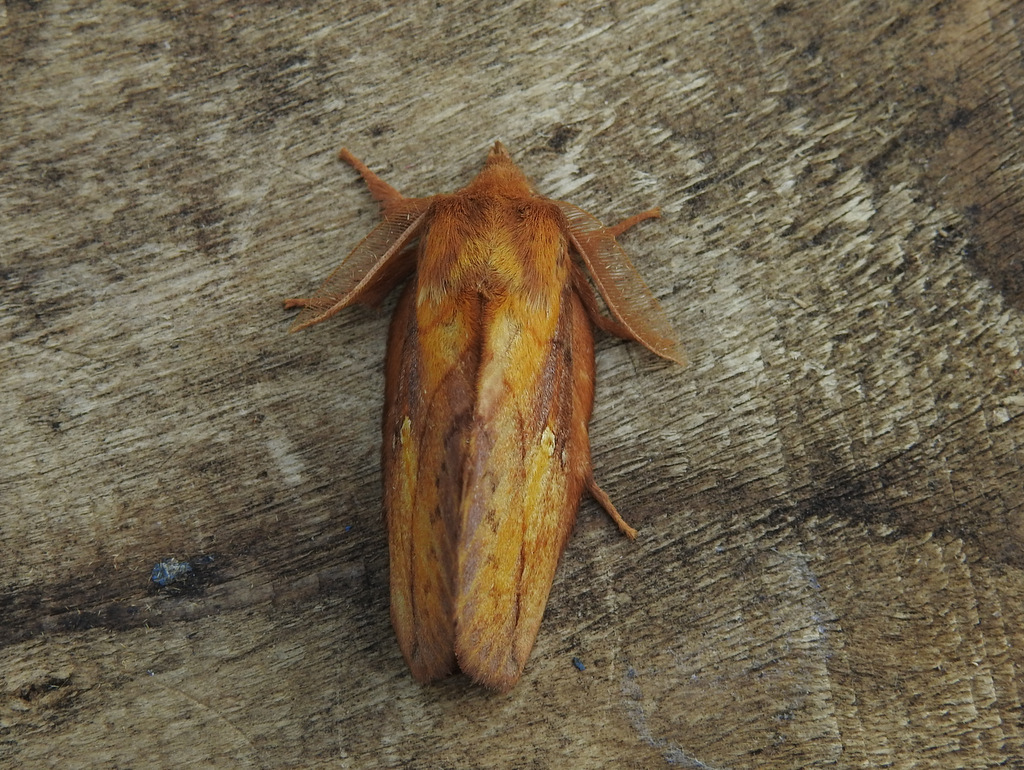


And that 'snout' genuinely does whiffle about.

I'm almost done, just a few more to close...

We've had Dingy Footman before, but the grey form. I hope I've got the ID correct, but the breadth and gentle curve of those wings is pointing me at Dingy rather than Orange or Buff.

And finally, some micros...

Possibly a migrant? Though I understand they are resident too. Anyway, Diamond-back is another moth I'd heard of but never seen. Couldn't believe how tiny it is!


I like plume moths. They are superbly weird.

This moth is 7mm long. Incredibly, the ObsIdentify app got this one spot on too, again with a confidence score of 90-something percent. There is a 6mm confusion species which is more common, but I am happy that this ID is correct.

I seriously could not cope with 13 new species every night but, I have to say, this learning curve is quite a blast...

Friday, 8 July 2022

Scarce

Earlier this evening there was a flying ant hatch, and for only the second or third time I recorded Mediterranean Gull from the garden - two adults up with the crowd of Herring Gulls. Apart from the recent visit to Culverhole, I think that's about all the action my bins have seen for at least a week! I am confident that birds will soon reassert their rightful position, but right now it is all about the moths...

The garden tally is now 157 species. Among recent additions have been creatures plain, beautiful, and downright weird. The cherry on this rich cake was provided by yet another genuinely scarce moth, three nights ago. I'll get to that in a moment, but first, a few of the new ones...


Struggled with this one. Thought it was going to be a large Tortrix moth, i.e. a 'micro'.

This recent colonist is one of the biggest so-called 'micro'-moths I've encountered. At least the size of a Small Magpie.


Always delighted to add another pug...

...or two.

A tiny and spectacularly weird little thing

So, here's the scarce one...

This is Anania stachydalis, or the Woundwort Pearl.

As far as I can tell, there have been very few records in Dorset. I could so easily have overlooked this little moth, because it looks very much like a common species which has been in the trap several times. I've never made much of an effort to photograph that one previously, so here's a pot-shot from mid-June...

Anania coronata, the Elder Pearl.

Anania coronata (Elder Pearl) has become a familiar sight, but I have been carefully checking them all just recently. This is entirely because of that morning I watched the moth traps being emptied at Mapperton. One of the moths caught was a good candidate for Anania stachydalis, and Jack Oughton pointed out why. For some reason I have remembered what he told me, and am rather pleased I did.

Top: Anania stachydalis
Bottom: Anania coronata


Right. Time to get the trap out...

Tuesday, 5 July 2022

Culverhole Revisited

It is just over a year since my last visit to Culverhole, a quiet little spot rich in plants and creatures, on the Jurassic coast east of Axmouth. Today I finished work a bit early and headed out along the shingle. I had two targets. One, Marsh Fragrant Orchid. I already knew that at least two were present recently, so had no doubt they still would be! And two, Cliff Tiger Beetle. Last year I flukily came across one of these rare beasts - my first - and got a couple of poor photos. This time I wanted to find one on purpose and get better pics, if possible.

Things went pretty well...

The shingly plod was instantly rewarded with these 5 Med Gulls, plus at least another four offshore

Culverhole.

Two Marsh Fragrant Orchids, settled and showing well. It felt like they were in exactly the same spot as last year's singleton.

A rich lushness of Marsh Helleborines.

With invert-hunting my main priority this time, I didn't really go to town on the flowers. Suffice to say there were hundreds of Marsh Helleborines, but most of the other orchids (Southern Marsh mainly) had gone over.

I spent a lot of time scanning the deck for scuttling things. I expected a lot of spiders, but amazingly the very first thing that caught my eye was a Cliff Tiger Beetle! It dodged and weaved, and eventually vanished in the vegetation before I could get any photos. Needless to say, the next hundred scuttling things were indeed spiders.

There was lots of other stuff to look at though...

I am pretty sure this is a teneral Keeled Skimmer.

Obviously I had an eye out for moths. This one as yet unidentified. Judging by its plain brown-ness, it might stay that way.

Serious jaws on these flies. I did look them up, and got as far as family, but can't remember what it was. Began with 'C' I think. I can't even cope with moths, so flies have go no chance.

Another Keeled Skimmer. Female I presume.

Safe ground at last. Male Keeled Skimmer. Definitely.

Keeled Skimmer was easily the most numerous dragon. I got plenty of photos, which means...

...I've got to use them.

Another as-yet-unidentified moth.

Finally, after several thousand spiders, another Cliff Tiger Beetle. Unbelievably it paused for a millisecond, so I got a record shot...

Cliff Tiger Beetle. Obviously.

The vegetation was short enough and sparse enough that I could follow it quite easily, but it rarely stopped moving, and I thought my chances of a decent-ish photo were slim. But then I had an idea...

Cliff Tiger Beetle. In the shade here, so not much colour.


In the sun. About as colourful as it gets.

The idea? Pretty obvious really. A bit of judicious 'shepherding'...

You. Shall. Not. Pass.

Actually, this only held it up for a few seconds, if that. Mostly it just changed direction without stopping.

A very satisfying encounter with this rare little beetle.

Finally, to cap things off, a couple of macro-moths on the way back...

Flushed off the beach - a Common Wave. We've had this one in the trap.

On the path back from the river mouth - Chalk Carpet. A new one for me, and not that common I think...though perhaps they are along this stretch of coast. Best shot I managed before it was flushed by a passing cyclist.

And home for dinner...

Monday, 4 July 2022

Very, Very Local

I haven't written much about nocmig just lately. Why not? Because it has been utterly dire. The last ten days of May were bad enough, but June was simply desperate. Blank after blank...after blank. A couple of times I forgot to switch from 'stand-by' to 'record', and tellingly found myself relieved at the prospect of not having to scroll through another night's-worth of nothing. And then, finally, in the early hours of June 25th...

Yay!! A wader! the unmistakable sonogram of a Redshank.

If pressed to pick one species, I would have predicted Common Sandpiper as the first nocmig wader of 'autumn'. As it was, there were another four blank nights before that happened, 18 minutes into June 30th. So, a whole month of nocmig recording, with just one Redshank, one Common Sand, one Barn Owl and two Moorhens to show for it. But I didn't give up. Surely it will pick up through July, I thought, as returning waders pass through? And already, it has...

The begging calls of juv Tawny Owls have featured a couple of times, which nicely confirms local breeding, and my first Oystercatcher since May 18th was great to see/hear this morning, but that's all small potatoes compared with this...


Despite knowing this call quite well from my time on the Axe Estuary, I did seek reassurance from the WhatsApp group for what is a nocmig first for me: Black-tailed Godwit. That was recorded at 01:43 yesterday morning.

Never give up!

Back in February, our younger son Baz sent this photo, taken on a site he was working at close to Axminster...

Two hibernating Heralds

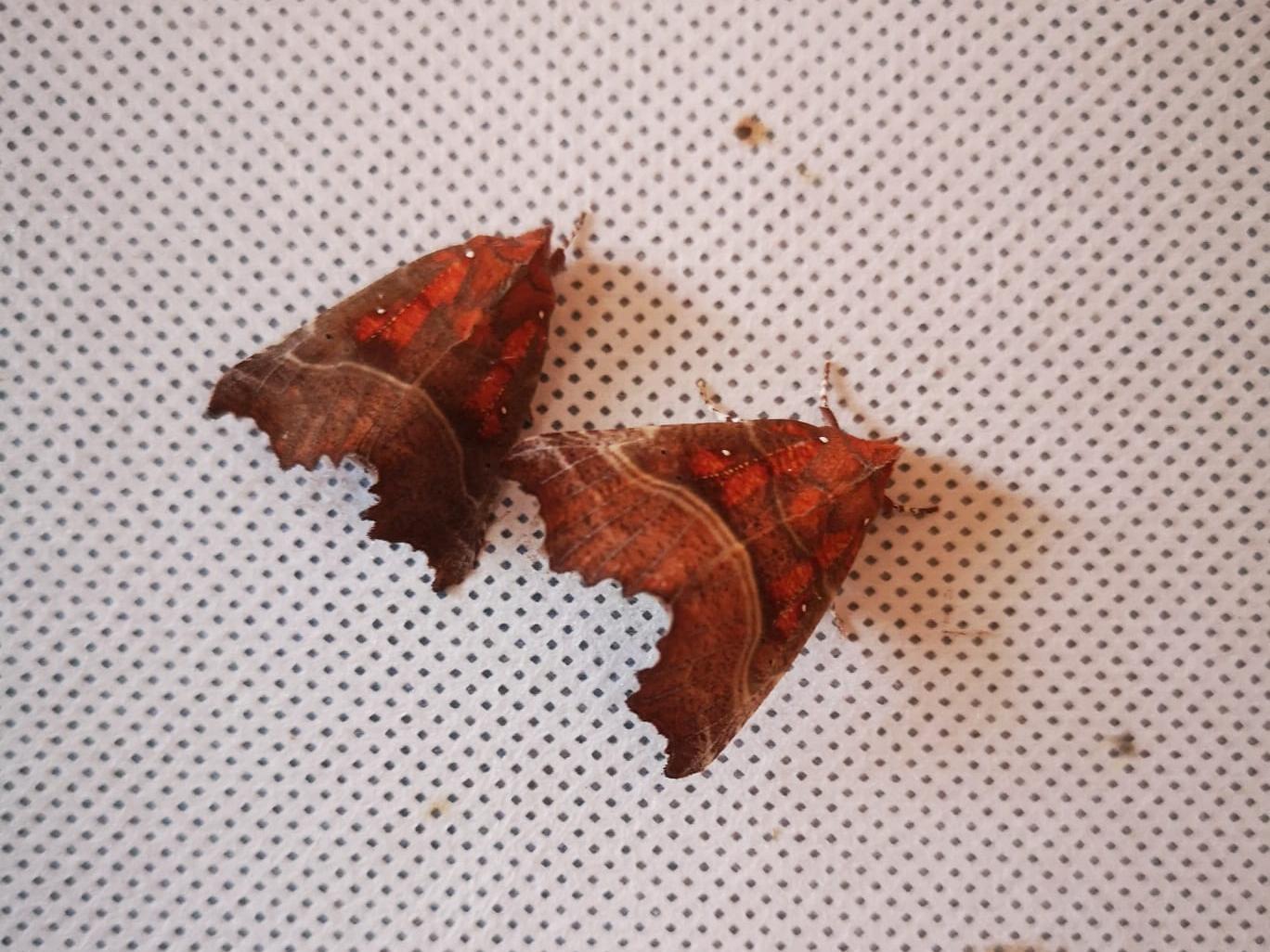
I was very envious. I'd never seen a Herald. I knew that they hibernated in quiet, dark places like caves, old WW2 bunkers and suchlike, but never realised the moth trap might pull one in. Well, this morning...

Wow! What a stunning moth this is!

This morning's other new moth stood no chance really, but was nice all the same, if in a quiet, very-understated-indeed kind of way...

I did struggle a bit to identify this, but it is a bit worn, and the markings somewhat faded.

There was another smart new one yesterday morning too...

Ridiculously furry.

In a few minutes I shall clip the nocmig microphone to the cabin fascia, and prep the actinic for another session. A garden sound trap and a garden light trap. I suppose one day soon I will have to get out looking at stuff a bit farther afield, but right now, home is where it's happening...

Saturday, 2 July 2022

From the Studio...

The moth list hit 140 today. Many keen moth-ers have garden lists running into several hundreds, so I've barely scratched the surface yet. Even so, that's 140 [mostly] new names to learn, plus the ability to match them to actual moths. Boy, it's hard. Especially tricky are the scientific names which come with most micro-moths. I don't know when I last needed to learn so much new stuff so quickly.

Photography has helped, especially with the micros. By taking photos, then labelling them, I am hoping the process of simple repetition will make some of it stick. This has presented new challenges though. While it's easy enough to photograph a Privet Hawk-moth 60mm long, some of the micros have been 5mm or less - 3.5mm is the smallest so far - and those tiny ones are very difficult to capture well with the P900. But it has been fun trying...

Phyllocnistis saligna (Willow Bent-wing) makes an appearance in my state-of-the-art macro-photography studio, complete with some old bloke's knackered-looking thumb.

Getting the lighting right has been the most challenging aspect really. A soft light, yet bright enough to let the camera operate on a setting that will give minimal pixellation, is what I'm after, but too often I get more contrast than I want. Slowly improving though, I think. A few favourites from the last couple of days...

Shades of grey. Sycamore (left) with a Dark or Grey Dagger. The latter are [externally] inseperable as adults, though their caterpillars are chalk and cheese.

Sexually dimorphic, so I know that this is a female. If all my photos of 8mm moths came out this well, I would be very pleased indeed.

The ID of this 6mm moth is probably a bit sketchy, as there are look-alikes. However, I have plumped for the commonest probable.

A new pug this morning. Woo-hoo! It made me very happy.


This is our third Small Elephant Hawk-moth, and a bit less than pristine. Not sure why I didn't photograph the first two, because they are absolutely gorgeous.

One of the millions of 'bird poo' moths.

As far as I can tell, the miniscule speck in the first photo is probably the scarcest of this lot, and may even be a first for Bridport. Certainly it is the least recorded anyway. And I'm not surprised. Even those with eyesight sharp enough to see the thing would be hard-pressed to recognise the flicking, silvery speck as an actual moth...

Those scattered 'hairs' are from a previous shaggy occupant of this pot, in other words a normal-sized moth.

Somewhere in those photos above (Coleophora lutipennella) I allude to my occasional 'less than certain' identifications. I have learned very quickly that moth ID is frequently art as much as science. Sure, you can dissect the things and examine their reproductive organs...but I have no intention of wandering that far down the Dark Path. Which means I have to rely on what is externally visible and do the best I can. This is fun, and a near-future post will be entitled 'Moth ID - First Impressions', or something similar. And it is definitely better than gulls.

Or worse.