Pages

Sunday, 17 July 2022

Creatures of the Night

The last four nights have produced some lovely nocmiggage. With Oystercatcher, Dunlin, Water Rail and Little Ringed Plover all featuring, it is clear that birds are once again on the move. Technically it may not be autumn, but migratory urges are evidently on the rise. However, great though those birds all are, they were soundly trumped by an early-morning Quail on Thursday...


In real life, the gap between the start of the first song-phrase and the end of the third was 1'23". I know from personal experience that Quail fly faster than a speeding bullet, so how on earth did I get three song-phases over such a long period? Did it fly round in a big loop? The time was 03:35, so was it thinking about landing somewhere nearby?

This is my second Quail. The first was at 03:05 on 11th July 2020, so, timing-wise, very similar. All the blank nights are forgiven when you get a gem like this once in a while.

The Little Ringed Plover is well worth posting too. Really clear...


And while I'm at it, a recording to demonstrate why it can be well worth firing up the nocmig kit a little early. The evocative sound of summer-evening Swifts...


Apart from nocmig, most other jollies have been provided by moths. It is just a non-stop voyage of discovery...

Swammerdamia pyrella - Little Ermine

Digitivalva pulicariae - Fleabane Fanner

Rhodophaea formosa - Beautiful Knot-horn

To the naked eye, the top two are dingy specks and the bottom one a boring brown thing. Through a hand-lens they are transformed into intricately-patterned wonders, and the camera brings that out to a degree. Even a moth which seems black and white is frequently not black and white...

One of last night's new ones: the Dot Moth. Is that a purply tint? Dark blue? And the little chocolate-brown tuft behind the thorax...

There was another Blair's Mocha yesterday morning, our second. Since the first I have learned that the species is not necessarily the scarce migrant it once was. At least, not in Bridport. Here is the moth itself, followed by a heat-map distribution of Dorset records this century, taken from Living Record...

Blair's Mocha, slightly pecked or something.

Blair's Mocha records in the Bridport area vs Portland, where the records no doubt will be genuine immigrants. Evidently I live in a Blair's Mocha hot-spot!

So there we are. As I type, the trap is out and the nocmig recorder on. I wonder what the morning will bring...

Thursday, 14 July 2022

So Much Life...

Just three days since the last NQS post, and I cannot believe how much stuff has piled up, waiting for a slot on the blog. Birds first.

It's ages since I last went for a proper walk at Cogden, so I rectified that on Tuesday evening. One surprise and one not surprise...

I've seen relatively few July Wheatears locally, and this juv is easily my earliest.

My first juv Med Gull of 2022. They've been out and about for a while now of course, but I have not.

Today I was at Mapperton again, a bit of homework in preparation for leading a walk at the weekend. The place is growing on me. Sadly I do not have the knack of capturing a view with a camera. At least, not in a way that truly conveys the spectacle...

A lush sea of growth, peppered with flower heads of the wonderfully-named Corky-fruited Water Dropwort. It is Insect Central. Fantastic.

I sat in this elevated spot for a few minutes, soaking it up. Visible down in the meadow is a glorious, ancient Oak...

How many millions (billions?) of living things has this Oak provided with a home, food and shelter in its long, long life?

The abundance of invertebrate life was showcased to marvellous effect by the balmy weather...

The Boss. Golden-ringed Dragonfly. Saw several of these.


Male Keeled Skimmer.

I could easily have gone overboard on butterfly photos, but resisted. Absolutely loads of them about. Nothing fancy, and I must have inspected a few dozen Small Skippers without getting a sniff of Essex. Butterfly highlight was a rapid and elusive Silver-washed Fritillary, my first this year.

There was one big surprise though. Pausing to check out a couple of mostly-over Common Spotted Orchids, I caught a movement in the grass...

Hello, what's this hiding in the veg?

The big, pale 'U' behind the head brought to mind pics I've seen of Roesel's Bush Cricket. I could see there were two here, creeping about furtively, so I backed off a touch and tried to get some photos. Roesel's Bush Cricket would be new for me, but a close look at the back of the camera - and some in-the-field googling - confirmed my suspicions. Wa-hey! Insect tick.

A little later I came across a third, this one sporting a fine set of wings. Here are all three...

Male Roesel's Bush Cricket...

...female...

...and flying version.

I checked out a distribution map earlier. Their steady advancement west and north is obvious, but I'm not sure how common they are locally just yet. Whatever, I was very pleased to see them.

I cannot close this catch-up without mentioning a few moths. Natch.

The subtly lovely Rosy Rustic. Hints of pink in the wing fringes and elsewhere.

This one stumped me at first. I would never have guessed it was related to all those sandy-coloured jobs. Twin-spotted Wainscot.

This one stumped me for a different reason. In all the pics I've seen, this species has a bold white spot in each wing. Which this one doesn't. But still it's a True Lover's Knot, I assume.

Rapidly approaching 200 species now. I am trying to tackle as many micros as I reasonably can, but some do test my will to live. However, others are so bright and/or characterful that they actually make me smile, so I give them a big piece of my life...

Metalampra italica - Italian Tubic

One of the amazing mini-tripod type moths. This is Caloptilia rufipennella - Small Red Slender

Another tiny Manfrotto. Caloptilia semifascia - Maple Slender.

Agapeta hamana - Common Yellow Conch

Crassa unitella - Golden-brown Tubic

The moths above range from 'very common' to 'not really that common'. In almost every case, I have little idea what I've got until the ID process is complete, and am constantly aware that the new moth I am handling with ham-fisted ineptitude might be a national rarity, and I really ought to be less slap-dash with my potting technique.

I am seriously hoping that tonight is going to be rubbish for moths, because I badly need a decent kip  and the trap is having a rest...

Monday, 11 July 2022

Moth ID - First Steps

Having made the decision to get involved with moths, it has been interesting to embark on an identification journey that is almost from scratch. Presumably I did something similar with birds once, but it is so long ago that I can recall very little of it. With moths though, I've been taking mental notes of the process...

Here is our moth library...

The books at left and top centre we have owned since the 1980s; right and bottom centre are the new additions.

The older books are typical of the day, with colour photos of pinned specimens. Armed with these, we would tackle any new moth that had settled by our porch light, and do the best we could. Leafing through the plates, aiming to match a live moth with a crispy, mounted one became a regular summer morning's pastime. Then there would be reference to the text for additional information, sometimes a useful illustration of diagnostic features on tricky species, etc, before a verdict was reached. We had no impartial verifier to offer advice, to confirm (or refute) the ID, nor any idea of a record's context. We were, in effect, on our own.

Thirty-five years on, things could not be more different...

The new books are amazing. Manley is all photos of moths at rest, usually in similar attitudes for ease of comparison. Waring et al features the astonishing colour illustrations of Richard Lewington; again the moths are at rest, as you would see them in life. Both have been invaluable. So, that's the books. An improvement on Skinner and Goater, certainly as far as leafing through the plates and trying to match a live moth with a picture is concerned anyway.

And that last point is an important consideration, I would say. Because, faced with a new moth, what do you do? You flick through the pictures, looking for a match. Simple. When almost every moth is new, it can take ages. Soon you learn which plates to head for first, which speeds things up a bit, but even now, five or six weeks in, it can seem quite laborious on occasion.

On the up-side, I am building a repertoire of familiar moths, moths that I can do at a glance. And that feels great.

However, the biggest improvement in ID resources has nothing to do with books, and everything to do with digital technology. Photography and the internet have been a game-changer. The ability to punt out a photo on Twitter for example, and get umpteen skilled, experienced moth-ers on the case. Or the many excellent moth web sites out there, filled with superb images and ID tips. And then there is artificial intelligence. The ObsIdentify app will analyse your photo and offer an ID, complete with percentage confidence rating. How it does this I have no idea. It blows my mind...

Personally I dislike needing to ask someone else to ID a moth for me. I would much rather do it myself, and then seek confirmation if appropriate. However, sometimes I am stumped. Like this morning...

Last night, while out with the trap, I potted a pug on the cabin wall. I wrote 'Common Pug?'. For some reason I wasn't happy with it, hence the question mark. This morning I took a pot-shot...

Pug sp.

A couple of things bothered me. Wing shape looked a bit broad, no white spots where there ought to be, etc, etc... Lazily, I decided to try ObsIdentify first. The verdict was rapid: 'Plain Pug', it said, '100%'. No ifs or buts. I checked the books and multiple online photographic resources. No doubt about it, this very un-plain pug was indeed a Plain Pug. Dorset records do not seem to be that numerous (less than a handful in the Bridport area this century) so this is a nice catch. A better photo...

My first Plain Pug

I know from birding that the more familiar you become with everyday species, the more likely it is that you will spot a new one, even when differences are subtle. And with moths, subtle is everywhere.

I wonder if I will look back at this post in a year's time and smile at its naivety? Ah well, when it comes to moths, I am almost as naive as they come. So yes, probably I will.

Saturday, 9 July 2022

Thirteen Ticks

This blog hasn't been itself of late. Recent NQS output is clear evidence that something profound has happened to me. A friend has called it my 'moth conversion', which I think puts it perfectly. And this post is going to illustrate exactly why I have been unable to resist...

Last night was good. When the trap yields 92 moths of 53 species, and 13 of them are new...that is good. Also, very time-consuming. It is just as well that today is not a work day.

Many pics...

Another superb little V-Pug, which escaped my photographic efforts but landed on the cabin. 'Blue and green should never be seen', apparently, but happy to make an exception here.

I have come to like pugs very much, and am always really pleased to catch one. Very, very slowly I am getting to grips with some of them. For example, I can usually suss even a very worn Double-striped Pug just by size and wing shape now, and a quick look with a lens invariably confirms my suspicions. Mind you, many are still a real challenge...

Having caught my first Slender Pug a couple of nights ago, the prominent dark forewing spots on this one - and its tiny size - pointed me in the right direction.

But then there was a pug with absolutely no features at all. Or so I thought...

Very small, very plain, very tricky.

When stuck, I have a simple strategy. I take a photo, download it straight from the camera on to my phone, and run it through the ObsIdentify app. ObsIdentify is simply astonishing. Many, many times it has got the ID absolutely spot on. Obviously I do not trust it (it has been very wrong at least once) and carefully check its suggestions in what literature I have, and sometimes online too. At some point I'll write a post on it, but suffice to say that this morning it offered me an identification for this 'featureless' pug which, when checked, proved correct. At least, I think so. 'Haworth's Pug', it said, and gave me a confidence score of 98%. Surprised, I looked up Haworth's Pug...

First, it is not featureless. Notice the brick-red segments on the abdomen? That is definitely a feature, and combined with size, wing shape, complete lack of spots (dark or pale), and one or two other subtleties, point to this being a Haworth's Pug. Another new one.


Of course, many moths are the exact opposite of pugs...

I was completely blown away by how beautifully marked and attractive this moth is. And when it reveals those black and yellow hind-wings...Oof!

Another crisp looker which escaped the studio.

Very small, very bright. This photo doesn't do it justice really.

Another looker; another first. From zero to three in one night. Freshly emerged?

And then there were the big ones...

I've seen Eyed Hawk-moth before, but it is still a first for the trap.

Gently stroking its back produced the desired result, though I did feel a touch guilty for winding it up on purpose...


Once again I couldn't resist attending the trap for an hour or two last night. Meanwhile, indoors...

I heard a loud yelp, and soon after was presented with a large, netted moth by a supremely grumpy wife. Apparently it had flown into Sandra's hair, whereupon she promptly bashed herself in the face with her phone in panic. Not happy...

It was so worth all the pain. At least, that's my opinion...

This astonishing creature has to be seen to be believed. It is like a tiny flying Hedgehog, complete with a whiffly little snout.

Drinker is one of those moths I had seen pictures of but never encountered. It is a big, furry bruiser of a moth when its wings are open, but the way it folds up when at rest is quite amazing...

Definitely worth a couple more pics...


And that 'snout' genuinely does whiffle about.

I'm almost done, just a few more to close...

We've had Dingy Footman before, but the grey form. I hope I've got the ID correct, but the breadth and gentle curve of those wings is pointing me at Dingy rather than Orange or Buff.

And finally, some micros...

Possibly a migrant? Though I understand they are resident too. Anyway, Diamond-back is another moth I'd heard of but never seen. Couldn't believe how tiny it is!


I like plume moths. They are superbly weird.

This moth is 7mm long. Incredibly, the ObsIdentify app got this one spot on too, again with a confidence score of 90-something percent. There is a 6mm confusion species which is more common, but I am happy that this ID is correct.

I seriously could not cope with 13 new species every night but, I have to say, this learning curve is quite a blast...

Friday, 8 July 2022

Scarce

Earlier this evening there was a flying ant hatch, and for only the second or third time I recorded Mediterranean Gull from the garden - two adults up with the crowd of Herring Gulls. Apart from the recent visit to Culverhole, I think that's about all the action my bins have seen for at least a week! I am confident that birds will soon reassert their rightful position, but right now it is all about the moths...

The garden tally is now 157 species. Among recent additions have been creatures plain, beautiful, and downright weird. The cherry on this rich cake was provided by yet another genuinely scarce moth, three nights ago. I'll get to that in a moment, but first, a few of the new ones...


Struggled with this one. Thought it was going to be a large Tortrix moth, i.e. a 'micro'.

This recent colonist is one of the biggest so-called 'micro'-moths I've encountered. At least the size of a Small Magpie.


Always delighted to add another pug...
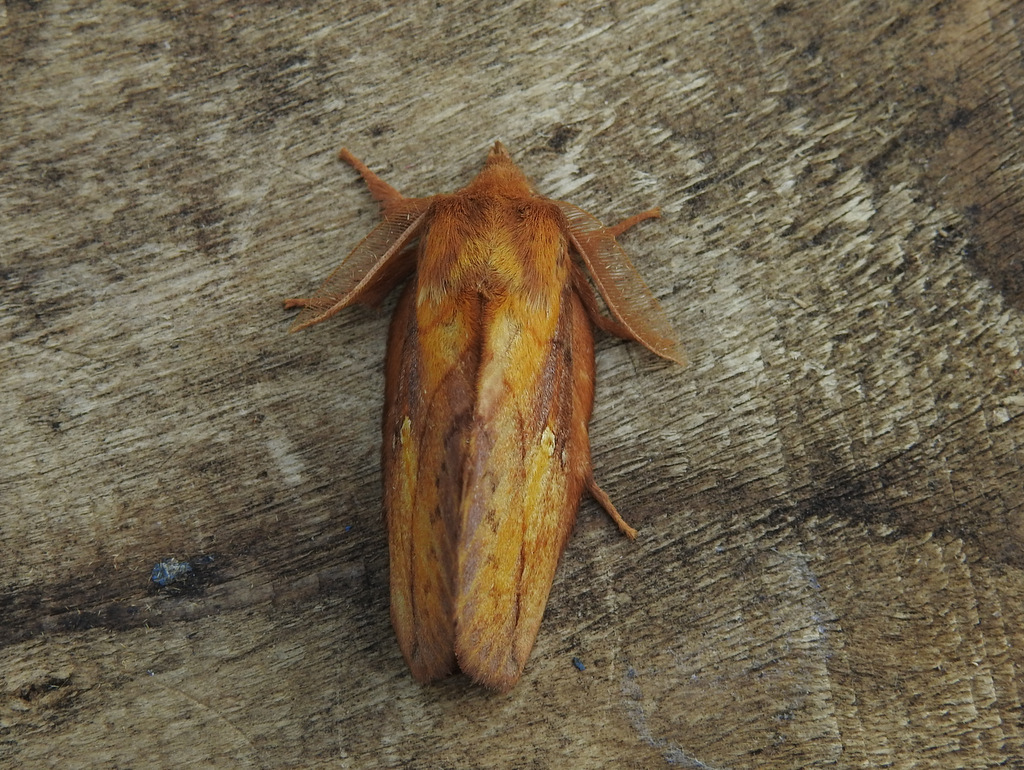
...or two.

A tiny and spectacularly weird little thing

So, here's the scarce one...

This is Anania stachydalis, or the Woundwort Pearl.

As far as I can tell, there have been very few records in Dorset. I could so easily have overlooked this little moth, because it looks very much like a common species which has been in the trap several times. I've never made much of an effort to photograph that one previously, so here's a pot-shot from mid-June...

Anania coronata, the Elder Pearl.

Anania coronata (Elder Pearl) has become a familiar sight, but I have been carefully checking them all just recently. This is entirely because of that morning I watched the moth traps being emptied at Mapperton. One of the moths caught was a good candidate for Anania stachydalis, and Jack Oughton pointed out why. For some reason I have remembered what he told me, and am rather pleased I did.

Top: Anania stachydalis
Bottom: Anania coronata


Right. Time to get the trap out...