Pages

Friday, 9 September 2022

Stripes

At 20:45 on Tuesday evening I caught a Convolvulus Hawk-moth nectaring on the garden Nicotianas, and five minutes later missed another. This is getting ridiculous! That's five now...

Convolvulus Hawk-moth #4

I expected great things that night, so 20 moths of 12 species was a bit of a come-down on Wednesday morning. With the weather forecast a bit dire I didn't put the trap out at all on Wednesday, but tried again last night. It was just 20:15 and I had barely fired it up when yet another Convolvulus Hawk-moth appeared at the Nicotianas! I got a short video before it flew off, and five minutes later it (or another) put in one more brief appearance. Unfortunately the video is dreadful. You can see what it is, but I'll spare you.

Once again I assumed the appearance of such a nice migrant early on was a good sign, so loitered by the trap for a while, and kept popping out to it through the evening. But it was really quiet. Before I went indoors for the final time I lifted the lid. One Square-spot Rustic was visible, plus I knew there were a couple of Large Yellow Underwings in there somewhere too. And that was about it. So I really expected very little this morning.

Shortly after 06:20 I placed the trap carefully on my work-bench and lifted the lid. And had a small heart attack...

Striped Hawk-moth. Top tray in the trap. Top moth!

Back in the late spring, this moth was on Twitter almost every day. There had clearly been an influx of Striped Hawk-moths, and many were catching them. As a non-moth-er, all I could do was gawp at the gorgeous photos. I knew that the chances of stumbling across one outside of a moth trap were slim to zero. When I finally did succumb to the Dark Path, this lovely creature was at least partially responsible for my fall. And Striped Hawk-moth has been at the top of my most-wanted list ever since. 

And now, after 80-something nights, it has happened.

Some pics...

A hint of rosy pink on the hindwings.


As the photos suggest, this moth is every bit as lovely as you can imagine. We have caught some fantastic moths this summer, but I reckon this one tops the lot for looks. Absolutely stunning.

Striped Hawk-moth

But it didn't end there. Another four new species for the garden...

Lunar Underwing. Evidently an autumn moth, so I suspect this might be the first of a few.

Cypress Pug. An easy one to ID, and very nice too.

Vestal. Another migrant moth. A pink stripe on a creamy background is more usual. I've never even seen a photo of one with so much pink on the wings!

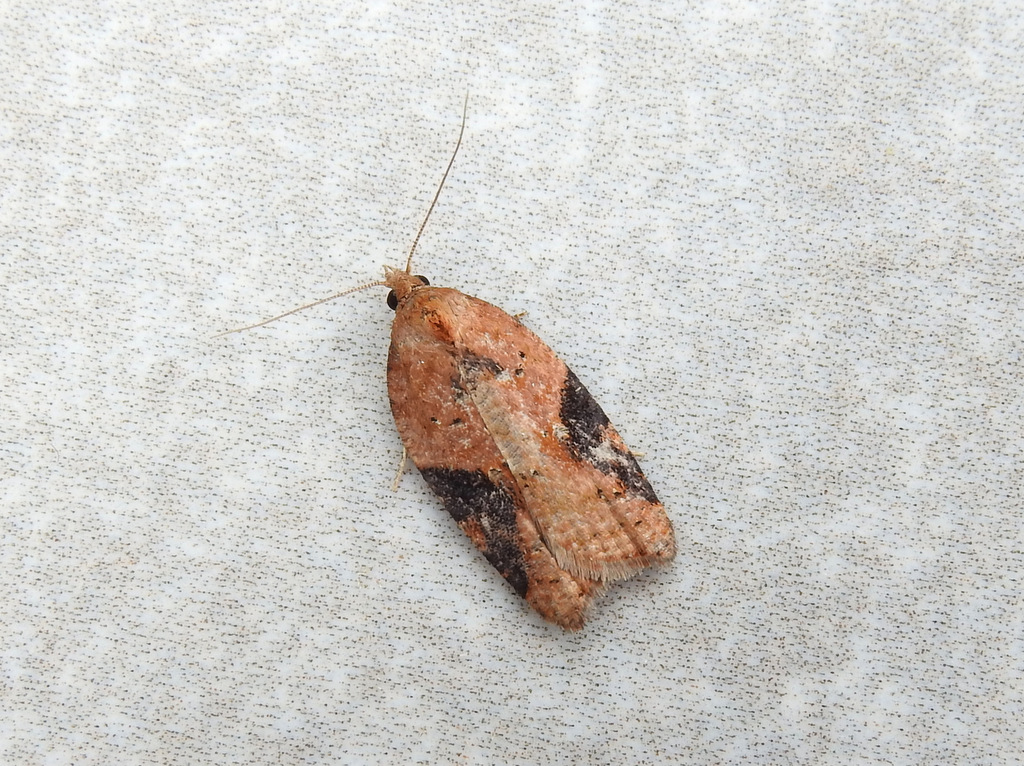
One of those annoying moths that might be one species or the other. Acleris laterana/comariana

So there it is. On the off-chance that any readers are contemplating the plunge into Darkness, just keep returning to this post on a regular basis. Or not, if you are determined to resist.

Monday, 5 September 2022

Gloom, Doom and Scarce Moths

Yesterday morning I was tempted into a seawatch, my first for ages. I lasted 45 minutes, and tallied 52 Gannets and 4 Med Gulls. An accurate Gannet count is always a bad sign, an indication that there was nothing better to keep me busy. Virtually any blow will result in a few Gannets passing, if nothing else. They are almost ubiquitous, and consequently taken for granted. Hopefully this will always be so. But...

Many years ago my old buddy Derek treated me to a RIB outing off the Pembrokeshire coast, which included a visit to the gannetry at Grassholm. What a spectacle! Sadly, this year Grassholm is just one of the many seabird colonies to have been clobbered by Avian Influenza. Around Britain, countless Gannets have died, are dying right now, will die soon. Just how far-reaching are the effects likely to be? I have no idea. However, posted on the local birdy WhatsApp group today was a photo of an adult Gannet in a Colyton field, well inland. And at Cogden this morning, a young Gannet flew towards the sea from the direction of the coast road! It had clearly wandered at least some way from its usual habitat, and is the first local bird I've seen inland of the beach...

Gannet heading towards the sea from inland. Don't ask me what it's carrying.

Also, a couple of Gannets passed by just off the beach. They are not often close enough to make me get the camera out...


I am not necessarily suggesting these Gannets were sick (apart from the Colyton bird) but the AI situation cast them in a different light somehow, and made me wonder. And tideline corpses have a more sinister feel too. Just how deeply is this disease going to bite?

Cogden this morning. There was a time I would simply have assumed 'natural causes', but not now.

I really, really hope that counting Gannets on a seawatch does not become a thing. That would be too sad.

So, after that sack of deep gloom, something completely different...

Back in July our little moth trap caught a scarce migrant called Tebenna micalis, or Vagrant Metal-mark. It was a bit knackered, and photos in the subsequent NQS post (here) were less than dazzling. Which was a shame because, judging by online pics, the moth itself can be very dazzling. Well, against all the odds (it really is scarce, with less than 20 on the Dorset Living Record map) we caught another last night...

A bit worn, but it looked pretty good through a hand-lens. Sadly my camera isn't good enough to do the thing justice, but imagine it is covered in loads of spangly glitter and you'll get the idea.


Something more obviously spectacular came our way a couple of nights back. I shall set the scene. It was barely dusk - not even 9pm - and I was loitering by the trap, hoping for an early micro or two. Right next to the trap are the remnants of our potted Nicotianas...

Well past their best, but thank goodness there are still a few blooms left.

...and right there, nectaring happily on the scant few flowers still in production, was a whopping great hawk-moth. It could only be one thing, surely...?

It was.

Convolvulus Hawk-moth. Our third.

I could scarcely believe it. Not only was this one an absolute peach, but what were the chances of my being on hand when it passed through? Slim, I think. Very slim.

Also that night, two more Old Ladies. Here is the best of them...

Every Old Lady we've caught has been a bit frayed around the edges. Appropriate, perhaps.

Some final bits and bobs...

Grey Seal this morning. I don't see them that often.

A particularly well-marked Rush Veneer.

It often strikes me that close-up photos of moths rarely, if ever, give much impression of how tiny some of them are. For example, many of the smartest geometers we've caught (those vaguely butterfly-like jobs) are a lot smaller than a Common Blue, which typically has a 28-36mm wingspan*. To illustrate, here is the garden's first Portland Ribbon Wave, photographed on the moth plank back in August. To me, there is no real sense of scale here...

Portland Ribbon Wave

And here is the garden's second Portland Ribbon Wave, photographed among assorted mothy paraphernalia in the garage today...

With a wingsan of 23mm, much smaller than a Common Blue.

Perhaps it is the seeming dearth of common migrants or something - the shadow cast by Avian Influenza doesn't help - but for some reason birding feels like the increasingly desperate pursuit of slowly diminishing returns right now. Or maybe it is because my age makes it possible to recall a different, more bird-rich (and possibly rose-tinted) time. I just need a memory-wipe and baseline reset...

In the meantime, there is much about mothing to avert the gloom.


* According to Wikipedia.

Saturday, 3 September 2022

Sleep Debt

As a way to add 'attraction' to the moth trap I hang an old bath towel on the garden cabin door. Not quite as proper mothy as a white sheet perhaps, but it seems to work. Before turning in last night I glanced out at it, and did the classic double-take. Because something enormous was clinging to it. As I had instantly guessed, our second Convolvulus Hawk-moth...

One very battered Convolvulus Hawk-moth.

There can't be many more nights left in such a beaten-up specimen, so I left it in situ, hoping it might wander off later. But this morning it was in the trap. I think I'll walk the old warrior down the road a bit before releasing it this evening; I wouldn't want to catch it again.

Some other moths from the last couple of nights...

Pale Eggar - a new one for the garden. So well-behaved it was almost comatose. Didn't need to bother with the fridge.

A small Green Carpet with slightly unusual markings.


One aspect of mothing that takes some getting used to is the variation in size and markings that some species exhibit. Normally this is acknowledged in the field guide, with a number of typical examples being illustrated. Other species, however, seem to vary little. These will have just one illustration and a note in the text to tell you how similar they all are. Green Carpet is one of those latter types. The trouble is, I have come to realise how easily you could write off a rarer moth as something common. So, unless a moth looks exactly like its illustration, I tend to worry. Thankfully there is usually a hint in the text, under the heading 'Similar species'. In the case of Green Carpet it said 'None'. Phew...

Regular Green Carpet on the left (exactly as per field guide); today's tiddler on the right.

Our second record of this nice little micro.

Easily the freshest, cleanest Red Twin-spot Carpet of the few we've caught. A lovely little thing, considerably smaller than a Common Blue butterfly. It stayed put for just one press of the shutter release. Glad I didn't muck it up.

Least Yellow Underwing. Another new one.

Angle Shades. A familiar moth to lots who don't really do moths, and this one is an absolutely pristine example. One of a few over the last week or so.

Dark Sword-grass. Our first (and so far, only) example of this immigrant.

Between 5 and 10 most nights recently.

A micro big enough to ID quite easily with the naked eye.

During August the trap was out on 30 nights. It caught between 13 and 166 moths per night, of between 13 and 47 species. The mean was 83/34. I suspect we would catch more with a 125W MV (mercury vapour) Robinson trap, but that would be a bit impractical for our situation. Also, as a beginner I am finding the catch rate manageable, and can usually have it done and dusted within an hour, sometimes a lot less. Then there is the nocmig recording to analyse, birding to think about - but mostly not do - and other, more mundane aspects of life to get on with. Hopefully, when the nights are a bit longer, I will get some sleep too...

Thursday, 1 September 2022

80 Nights

Well, that's summer done. Birding-wise I have not done justice to the months of June, July and August, and fully deserve the slim pickings I got. Not even a juv Yellow-legged Gull to my name, which says it all really...

Some of the blame for this rubbish effort can be attributed to a white bucket in the garage. This humble moth trap has transformed my summer and introduced me to a world of unexpected wonder. There was a patchy first week or so, but pretty soon it was out every night - 80 in total now. In the early days I shied away from many of the micros, but soon began to have a go at just about every moth in the trap. The garden list stands at 330 (give or take) and is added to almost nightly. There have been some notable scarcities, a fair number of migrants, and the current Scrobipalpa ocellatella (Beet Moth) invasion (43 last night, 35 the night before) to keep me entertained. And most of all, I have been completely blown away by how beautiful so many moths are. Frequent, legitimate use of the word 'stunning' has been the order of the day. And here is the latest new moth to earn that adjective...

Feathered Gothic from last night's catch. A fairly common and widespread moth apparently, but this is our first. Definitely stunning!

The so-called micro-moths have probably delivered the biggest surprise. Tiny, anonymous specks that bounce around the trap like nutters, or arrive on the trap vanes in the first hour or two of darkness, are transformed into something very different through a hand lens. The intricate pattern, vibrant colour or, in some cases, complete whackiness that greets your eye is so often a real treat. Here is a whole stack of very recent examples...

Common, but this is only about our third.

Very common, and highly variable.

Our first one of these. My ID is a bit tentative, but think it's okay.

A tiny one that we've had before. Pretty common I think.

With only about 20 records on the Dorset Living Record map, possibly our scarcest recent micro. It should have dark fringing on the wingtips, but that is worn away to such an extent that Obsidentify could not help me. I had to ID it the old-fashioned way, by thumbing through a field guide.

A nice example of the recent invader.

Bonkers little thing, roughly 3.5mm long. This is what is responsible for all those brown-leaved Horse Chestnut trees. Considering how many millions must be out there, we don't see it that often.

Another new one for us, though again quite common I think.

A regular visitor to our trap.

Very common, but this is the darkest I've seen so far.

Had a few of these.

We've had just a few of these. My camera doesn't do it justice, but those markings are amazingly intricate through a lens.

I should probably have labelled this Coleophora alcyonipennella/frischella, because it has a twin. In fact there are one or two other look-alikes too. Ah well...

Even with tiny micros of 3 or 4mm my camera doesn't do too badly, but when you see shots of the same species taken with a proper set-up... Wow! So much detail!

Finally, a few recent macros...

The beautifully marked L-album Wainscot, our second.

Old Lady x2. They are large! We've had four in total now.

Burnished Brass, always worth a photo.

Small Dusty Wave is a recent new one for the garden. This is our second.

So, autumn is here now, and I really should do some birding. The West Bex and Cogden area has produced at least two Wrynecks recently, and who knows what else might be out there? Mind you, there must be a lot of autumn moths I haven't seen yet...