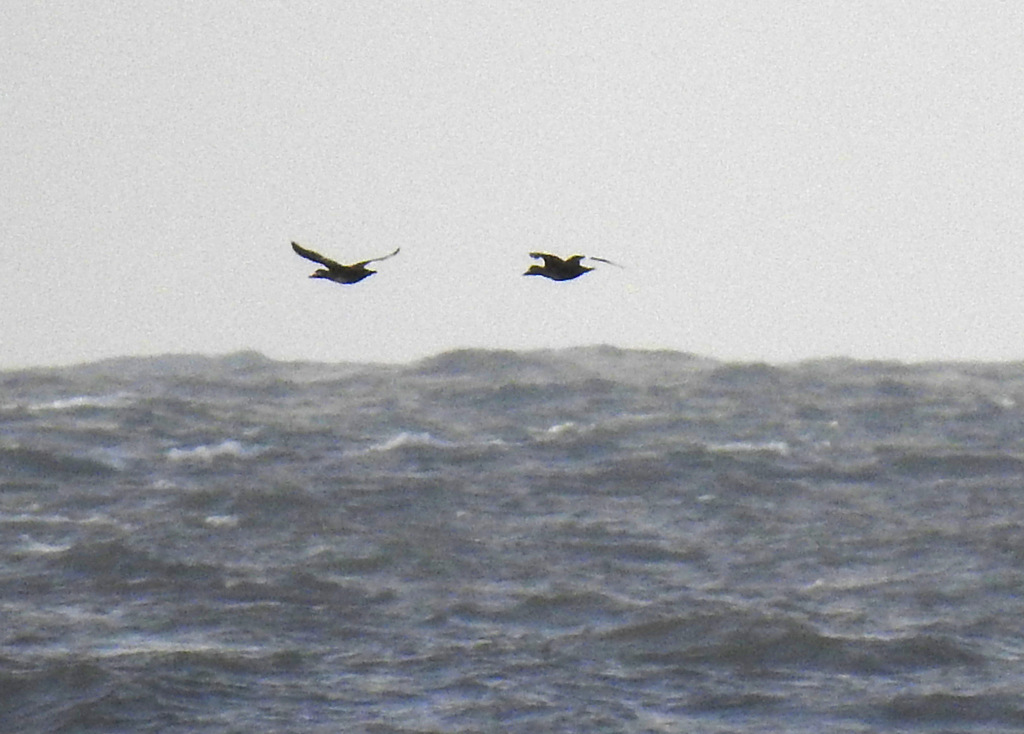
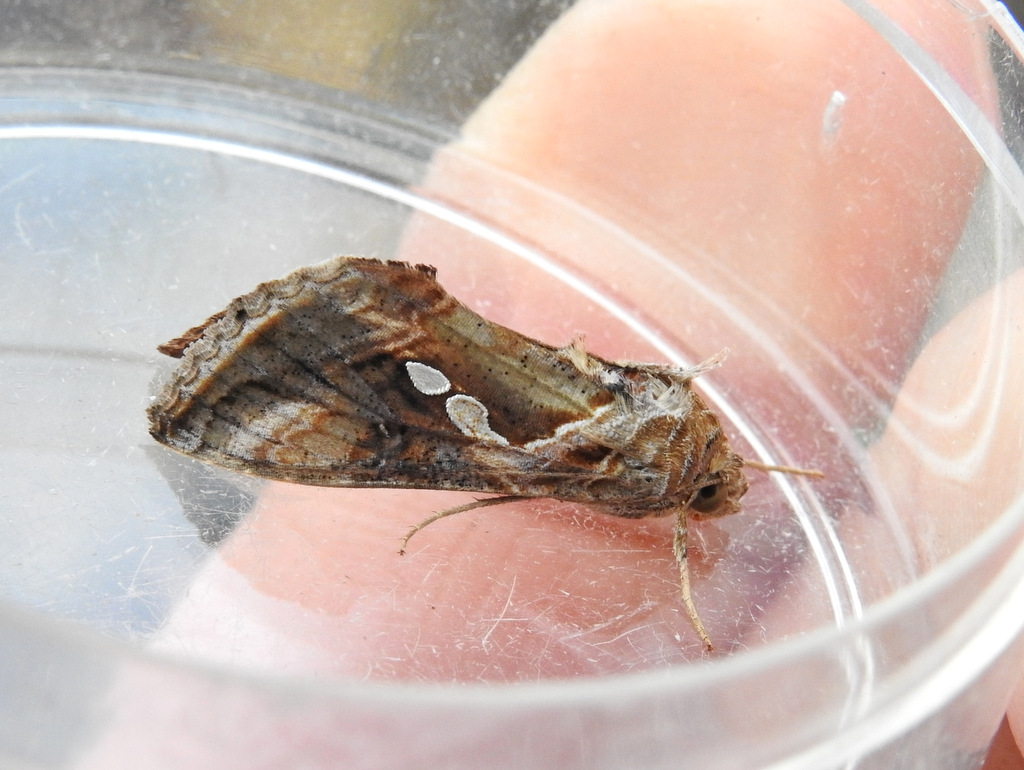
Against my better instincts I tried a seawatch this morning. Thirty-odd
minutes of almost nothing in a raging gale was more than enough, and I was
soon back home to a hot cuppa. Breakfast Twitter was unsurprisingly light on
mothy content for a change, but something about the ObsIdentify app popped up,
and I thought it was about time to do an in-depth NQS review. This afternoon I
was stupidly out in the relentless hoolie once more. In 4.5 miles of foot-slog I
am pretty sure I saw absolutely no birds at all, but had plenty of time to
think about my approach to a post about ObsIdentify. So, here it is...
First, what is ObsIdentify?
It is a smartphone app with which you can identify stuff. I use it mainly for
moths, but have also tried it with beetles, bugs and whatnot. You input a
photo, and it does the rest.
How good is it?
Ah, now you're asking...
I am old enough to have gone to school with a slide-rule in my briefcase. I
can remember when the first electronic calculators began to appear, and how
they were not allowed in exams. Why not? Because they made tricky sums way too
easy. To use a calculator was basically cheating.
In reality of course, it was quite possible to use a calculator and come up
with the wrong answer. You still needed to understand the problem you were
trying to solve, to input the correct numbers and do the correct things with
them, to press the correct buttons in the correct order. In other words, you
still needed to think. Because a calculator is not a brain.
And if you approach ObsIdentify with the same mindset, it is - in my opinion
- brilliant.
Some folk appear to have done all sorts of careful analysis of its
performance, far more than I could be bothered with. To me it is just a tool,
and here is one real-life example of how I have used it...
A few nights ago I caught a very small micro around 5mm long. It reminded me
of the Beet Moth (Scrobipalpa ocellatella) that occurred in big numbers back in August, but was obviously smaller. I
recalled that the Beet Moth was one of the Gelechiidae, so went to that family in my field guide and picked slowly through them
all. Nothing quite seemed to match, and I wondered if it might be something
else. So I took a ropey pot shot and ran it through ObsIdentify. The result was
pretty rubbish...

|
Technically this is known as 'inconclusive'.
|
On the upside, both suggestions are gelechiids, so it looked like I was on the right track. As far as I could discern, the
Potato Tuber Moth Pthorimaea operculella has never occured in
Britain. But the Tomato Leaf-miner has. It is listed as an adventive
and immigrant species. The photo in my field guide didn't quite match my moth,
but I found some photos online which were spot on. Anyway, I took some better
snaps and tried ObsIdentify again...

|
82% confidence! Okay. Now we're talking.
|
I asked the Twitter experts and got a general thumbs-up. I'm glad, because
Tuta absoluta has got to be one of the coolest scientific names
ever, and I am delighted to have it on my list. There are about 10 records on the Dorset Living Record map, and the
occurrence fits nicely with recent mothy goings-on. Common in southern Europe,
it seems very plausible that my moth was caught up in the huge late-autumn
immigration event that we've been experiencing, and has likely been whipped up
from Spain or suchlike. Here it is again, compared with a superb shot of this
species taken in Worcestershire by Patrick Clement, which can be found on
UK Moths...

|
Top photo by Patrick Clement (and identity confirmed by gen det, i.e.
dissection); below is mine. The spitting image, if you ask me. Among
other things, I learned that the stripey legs and palps are excellent
pointers.
|
I'm not sure if the record will pass muster 'officially' but it is easily good
enough to satisfy my needs, which basically means I can happily label my
photos thus...
So, what we have here is an example of ObsIdentify as a tool. From initially
having no clue, I was able to use ObsIdentify to give me some pointers. All
the legwork was then down to me. Anyone can do this, using books and
easily accessible online resources.
Next, two examples of ObsIdentify getting it totally wrong, and why that
doesn't matter...
First, this cracker...

|
Blair's Wainscot
|
This moth is one of my autumn gems, but I was very cautious with the ID. The
fieldguide was pointing me at Blair's Wainscot, and I knew that the
first for Portland had very recently been recorded, but it is a rare moth and
I could see the potential for error. So I decided to run it through
ObsIdentify to confirm my suspicions. The result was a bit of a surprise...

|
| Oh... |
There is a small version of Large Wainscot, so now I was wondering
whether that's what I had here. More research, more checking. In the end it was
obvious that ObsIdentify was wrong, and I can only assume that
Blair's Wainscot is not yet in its repertoire, or database, or whatever.
Anyway, the point is this: despite ObsIdentify's conspicuous failure to
correctly identify my moth, ultimately I wound up even more confident that it
was definitely Blair's because I was forced to look more deeply.
And another huge ObsIdentify fail...
Back in June, we caught a rare migrant plume moth called called
Scarce Light Plume or Crombrugghia laetus. I only ever got pot shots...

|
|
Crombrugghia laetus
|
Initial identification was made by using the Manley field guide. An obvious
confusion species is Crombrugghia distans or Breckland Plume, but in the field
guide that moth looks noticeably darker than our beast. However, I sought ID
confirmation from a local contact in the Dorset Moth Group, who ran it past a
very expert adjudicator. Thankfully he confirmed the identification. Job done.
Around this time I began to use ObsIdentify, and as an afterthought ran our
Scarce Light Plume through the app...

|
Oh...
|
100% wrong! Again, I assume Crombrugghia laetus is not in the Obsidentify
database. In my experience, when there are two very similar species,
ObsIdentify struggles to decide one way or the other. You get results like 59%
for one, 41% for the other, and so forth. A good example is the Wormwood Pug /
Currant Pug pair. I played around a lot with those two species on ObsIdentify,
and rarely (if ever?) got a really decisive result. So, a 100% confidence in
Crombrugghia distans made it pretty clear that C. laetus was not in the app's
system at all.
The whole point of this post is to illustrate that ObsIdentify is just a tool.
Like most tools, there are things it cannot do, that it is not (yet?) capable
of. If you accept those limitations, it can frequently be a massive help to
your ID process. I have read comments that it is useless - frequently
highlighting its gross errors - or that it leads to lazy habits. I disagree.
My experience of this imperfect app is very positive. It has helped me out
many times. Often it has pointed me in the right direction when I've been
stuck. And on the rare occasions it hasn't, I have still learned stuff.
All along I have tried to remember that one important principle: like the electronic calculator, ObsIdentify is not
a brain. When it comes to thinking, the responsibility is all mine.
.jpg)
.jpg)